

by Paul W. Taylor, TVW, Washington State Standard
October 16, 2026
Washington’s rising utility rates have exposed a central policy divide: Should the state make it easier for utilities to meet its clean energy mandates, or relax those mandates to contain costs and protect reliability?
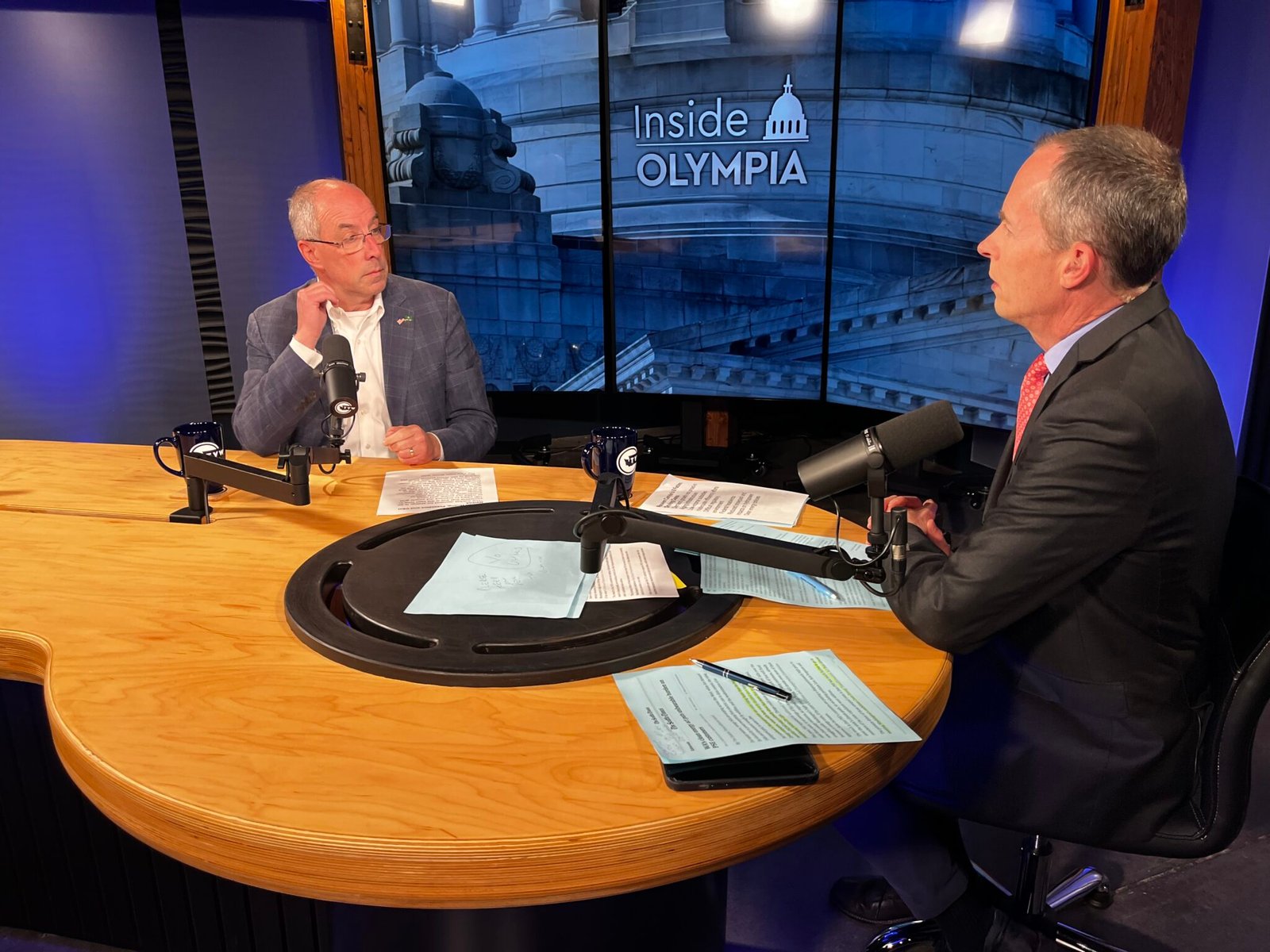
Former Democratic State Sen. Reuven Carlyle, an architect of Washington’s landmark climate laws, argues the state must remove barriers to building new energy resources while preserving its climate goals. Washington Policy Center Vice President of Research Todd Myers contends the mandates themselves are driving up costs and should be revised to give utilities more time and greater flexibility to use natural gas.
The two offered competing prescriptions in interviews with Austin Jenkins on TVW’s “Inside Olympia,”but found significant common ground.
Carlyle acknowledged lawmakers failed to adequately address permitting and infrastructure barriers when adopting the Clean Energy Transformation Act and Climate Commitment Act. He said he would address those shortcomings if writing the legislation today and expressed openness to economically sensible flexibility.
Myers advocated extending the 2030 clean electricity deadline and allowing additional natural gas generation when reliability is threatened.
Their differences over natural gas contrast with shared enthusiasm for nuclear power. Carlyle reluctantly accepts that additional natural gas peaking plants may be necessary but strongly prefers small modular nuclear reactors or geothermal energy. Myers sees natural gas as an affordable, reliable bridge while supporting nuclear technology, potentially financed by data center developers.
Both endorsed faster permitting and saw opportunities for data centers to finance new generation, although Carlyle emphasized their growing electricity demands while Myers questioned their current impact on Washington’s consumption.
Both advocated greater efficiency and consumer engagement to reduce peak demand. Carlyle emphasized grid modernization and distributed battery storage; Myers favored time-of-use pricing and financial incentives.
Their competing prescriptions leave lawmakers and utility regulators confronting the same challenge: maintaining affordable, reliable electricity while determining how much flexibility Washington’s clean energy transition requires.
Washington State Standard is part of States Newsroom, a nonprofit news network supported by grants and a coalition of donors as a 501c(3) public charity. Washington State Standard maintains editorial independence. Contact Editor for questions: info@washingtonstatestandard.com.