

by Tom Banse, Washington State Standard
June 18, 2026
Community opposition to big battery farms is spreading across western Washington just as the technology takes on growing importance for the state’s clean energy transition and to stabilize the electric grid.
A multiplying number of cities and counties have enacted moratoriums on permitting for new utility-scale battery storage systems over the past year. Over a similar timeframe, project developers withdrew around a dozen early-stage battery storage proposals from the interconnection queue of Puget Sound Energy, Washington’s largest utility.
Now, green energy groups, electrical trade unions and project developers are redoubling efforts to persuade the public that the big battery arrays are needed to keep the lights on as rising amounts of renewable electricity come onto the grid.
A battery farm basically operates like a giant rechargeable battery. The owner charges the batteries at off-peak times or on sunny, windy days when renewable energy is abundant. Then, when the sun sets, the wind calms, or electricity demand spikes, the operator can send the juice back onto the grid.
“If what the community is really communicating is: We want to pump the brakes a little bit. We want to understand these technologies. We want to understand their safety, their placement in our community… That’s a condition that I think we need to adapt to,” said Scott Bolton, BrightNight Power senior vice president of external affairs.
“If these moratoriums are communicating, we just don’t want these solutions, that’s very troubling at the end of the day because, you know, if not this, then what?” Bolton added.
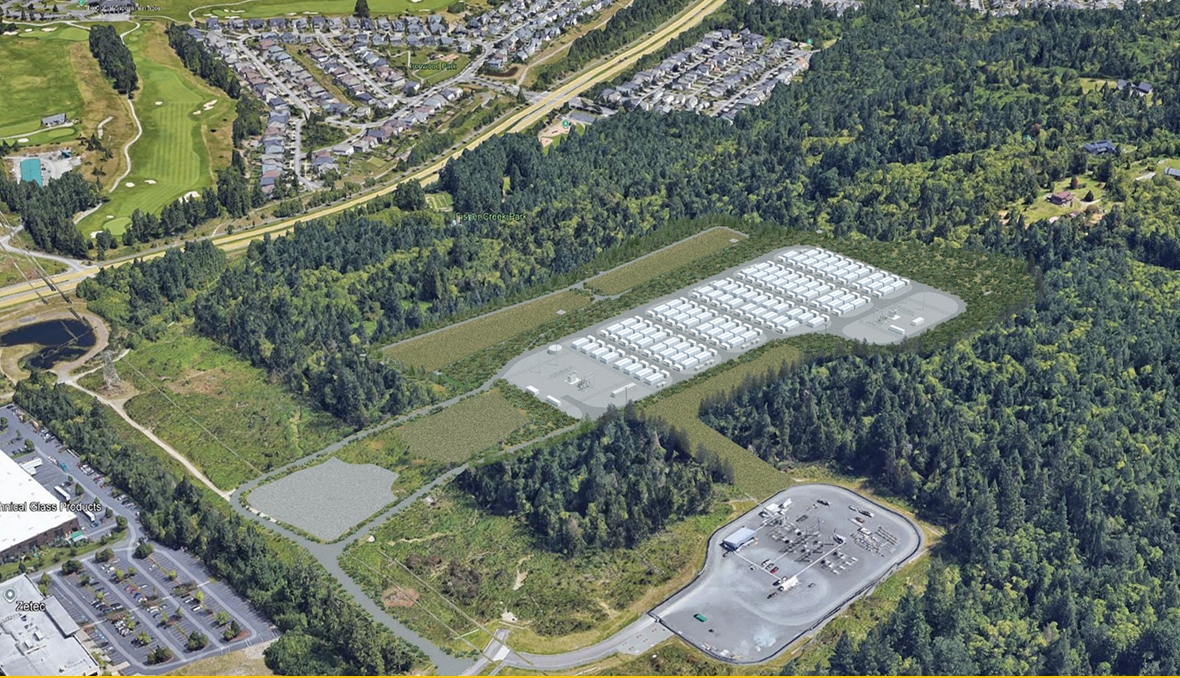
Opponents of battery farms perceive a threat to their neighborhood safety, their children’s schools and local farmland. A chief concern is that the rechargeable banks of lithium-ion batteries could catch fire and send plumes of toxic smoke drifting overhead and fish-killing runoff into streams.
The energy industry has a hard sell ahead, judging from the unrest that spread from King County to Skagit, Pierce, Kitsap, Klickitat and Thurston counties — all places where independent developers have proposed commercial battery energy storage systems, or BESS in industry shorthand.
“There’s a dawning awareness of the awful effects of BESS installations such as thermal runaway fires and toxic smoke, and the horrible noise from cooling fans,” wrote Anacortes resident Elke Siller Macartney in a public comment to the Skagit County Commission that she also posted on social media in early June. “It’s the height of arrogance for these companies to pretend to install these things for the supposed good of all.”
Developers of battery farms consistently use the term “rare” to describe the frequency of battery fires and blame first-generation systems that they say have since been improved.
Critics note that rare is not the same as never. In online forums, they share articles and pictures of batteries of various sorts, or battery manufacturing plants, catching fire on a near-weekly basis somewhere around the world. Large-scale battery fires are notoriously difficult to extinguish.
Insurance underwriter Michael Carrington has studied battery safety closely for his firm Tokio Marine GX, a renewables insurance specialist. He said commercial energy storage systems have reached “a high level of maturity,” giving him confidence to issue coverage with large sums of money at stake.
“The likelihood of any kind of fire is very low,” Carrington said in an interview from London. “How the technology has improved and the regulations have improved is really fantastic.”
Carrington specifically mentioned two safety features that are now industry standards — off-gas sensors and battery spacing. He said off-gas sensors detect early if battery cells are overheating and can automatically trigger a shutdown. Spacing battery modules meters apart outside prevents fire from spreading between adjacent modules.
Why do Northwest utilities want battery storage?
Some of the largest utilities in the Northwest, including Puget Sound Energy, Avista and Portland General Electric, publicly solicited battery energy storage proposals in the last couple years.
The first utility-scale battery storage systems in the region were co-located with solar and wind farms east of the Cascade Range. Those sites tend to be less controversial, but expose the utilities to long-distance transmission bottlenecks. Hence, the push for standalone battery farms nearer to cities, which lessens the need to build more cross-state power lines.
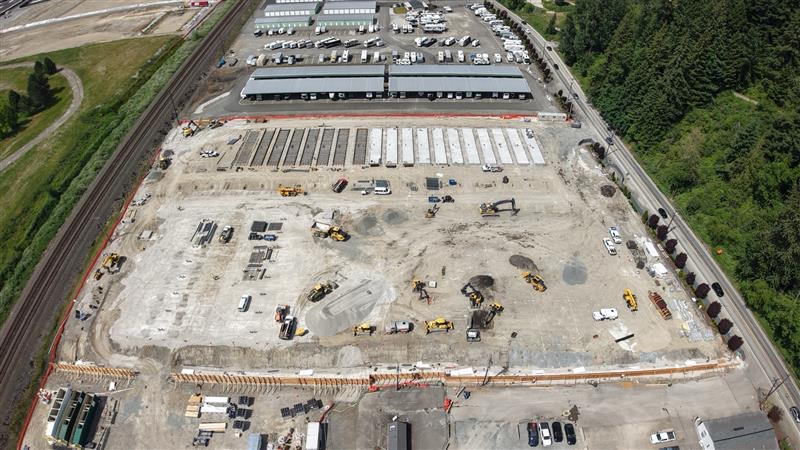
Bellevue, Washington-based PSE has a goal to add 1,500 megawatts of energy storage by 2030. An initial 200 megawatts toward that goal should come from a battery storage project now under construction in Sumner by BrightNight and Cordelio Power. Roughly eight other proposed projects are in various stages of permitting in PSE territory, with the majority facing serious pushback from neighbors, such as near Snoqualmie.
“Battery energy storage systems (BESS) are an important part of PSE’s plans to provide the reliable power our customers expect while delivering more of the clean energy required by Washington’s aggressive clean energy requirements,” utility CEO Mary Kipp wrote in a letter last month to Snoqualmie’s mayor and council.
The Snohomish County Public Utility District is on track to bring the first utility-scale battery energy storage system in western Washington online this fall. The 25-megawatt project near Arlington Municipal Airport is owned by a company named Ameresco.
A Seattle nonprofit that advocates for decarbonization, Clean & Prosperous, argues that blocking battery storage facilities will eventually hamstring wind and solar farm expansion and prolong dependence on fossil fuel generation.
“This is not infrastructure that is just nice to have. It’s critical infrastructure. We need to develop, particularly batteries in western Washington, to make up for our lack of transmission capacity across the Cascades,” said Isaac Kastama, the group’s government relations director. “We are facing increasing risks of brownouts and blackouts.”
Moratoriums and permit reform
Urged on by skeptical residents, a growing number of city and county councils in Washington are passing six-month or one-year moratoriums on applications for new utility-scale battery storage facilities. This does not affect residential-scale battery installations, often tied to rooftop solar.
“There is tremendous, valley-wide concern related to battery energy storage systems,” Snoqualmie Councilmember Dan Murphy said at a May 26 council meeting. “The moratorium gives cities the time to better study the issue, press pause and look into all of these matters.”
Snoqualmie was one of at least six jurisdictions where the council voted within the past month to impose or extend a commercial battery storage moratorium. The list also includes Carnation, North Bend, Puyallup, Duvall and Kitsap County. These preemptive and temporary moratoriums aren’t blocking any known battery storage projects.
The recent council actions come on top of earlier votes in the same vein by Bonney Lake, Black Diamond, Covington, Enumclaw, Maple Valley, Mount Vernon, Renton (now expired), Auburn (expired) and Klickitat and Skagit (expired) counties. All of these places wanted to buy time to draft local siting criteria and specific regulations covering such matters as screening, setbacks and fire response.
In Oregon, Marion County passed an outright ban on commercial battery energy storage facilities last year, covering the unincorporated terrain around Salem.
Against this backdrop, Clean & Prosperous organized a study mission to Texas last month for Washington state legislators, utility executives and green energy advocates. The objective was to learn how the Lone Star State got to No. 1 in battery storage, solar and wind power. Washington ranks dead last in clean energy growth, according to an analysis by ProPublica and Oregon Public Broadcasting.
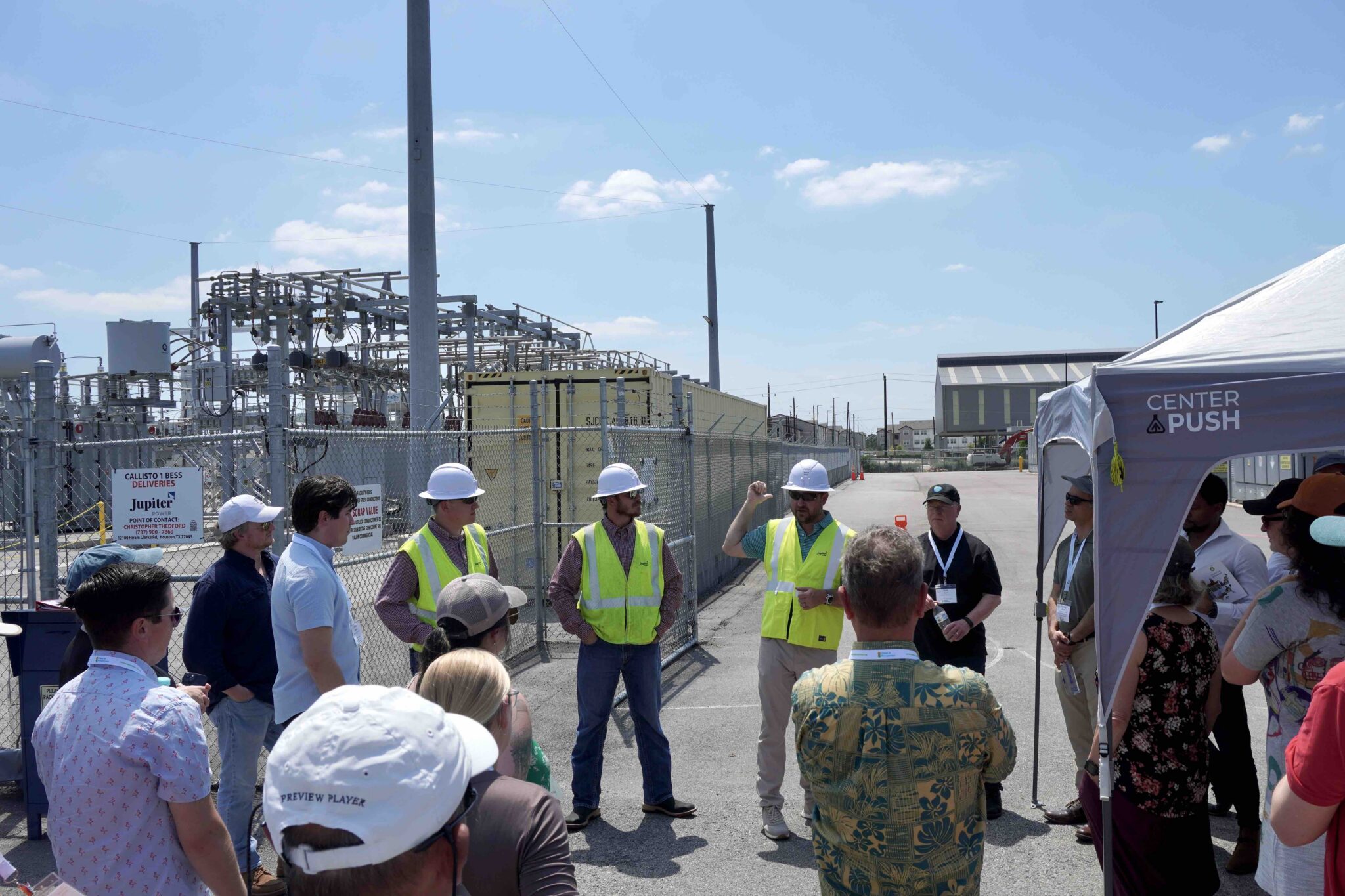
One of the tour stops was a large-scale battery energy storage system in Houston. Project developer Jupiter Power said the Callisto battery farm took 18 months from conception to operation, including about six months in permitting.
“When Jupiter Power gave that stat to our delegation at the BESS facility when we were being briefed, everybody let out like a group-wide, jealous laugh,” said Clean & Prosperous Communications Director Kelsey Nyland, who was there.
“Twelve months later, it was saving taxpayer dollars and doing it with renewable energy,” added tour participant Beth Doglio, a Democratic state representative from Olympia, in an interview with KNKX Radio upon her return. “That is not possible in the state of Washington at this time, and we need to figure out how to make it possible.”
Besides Doglio, who chairs the House Environment and Energy Committee, Democratic state Reps. Adam Bernbaum, Jake Fey and Republican Andrew Barkis joined the Texas trip with an eye on permitting reform.
The first big standalone battery storage facility that Puget Sound Energy will bring online — BrightNight’s project in Sumner — will have taken about four years from conception to operation when it enters service at the end of this year.
Washington State Standard is part of States Newsroom, a nonprofit news network supported by grants and a coalition of donors as a 501c(3) public charity. Washington State Standard maintains editorial independence. Contact Editor Bill Lucia for questions: info@washingtonstatestandard.com.