
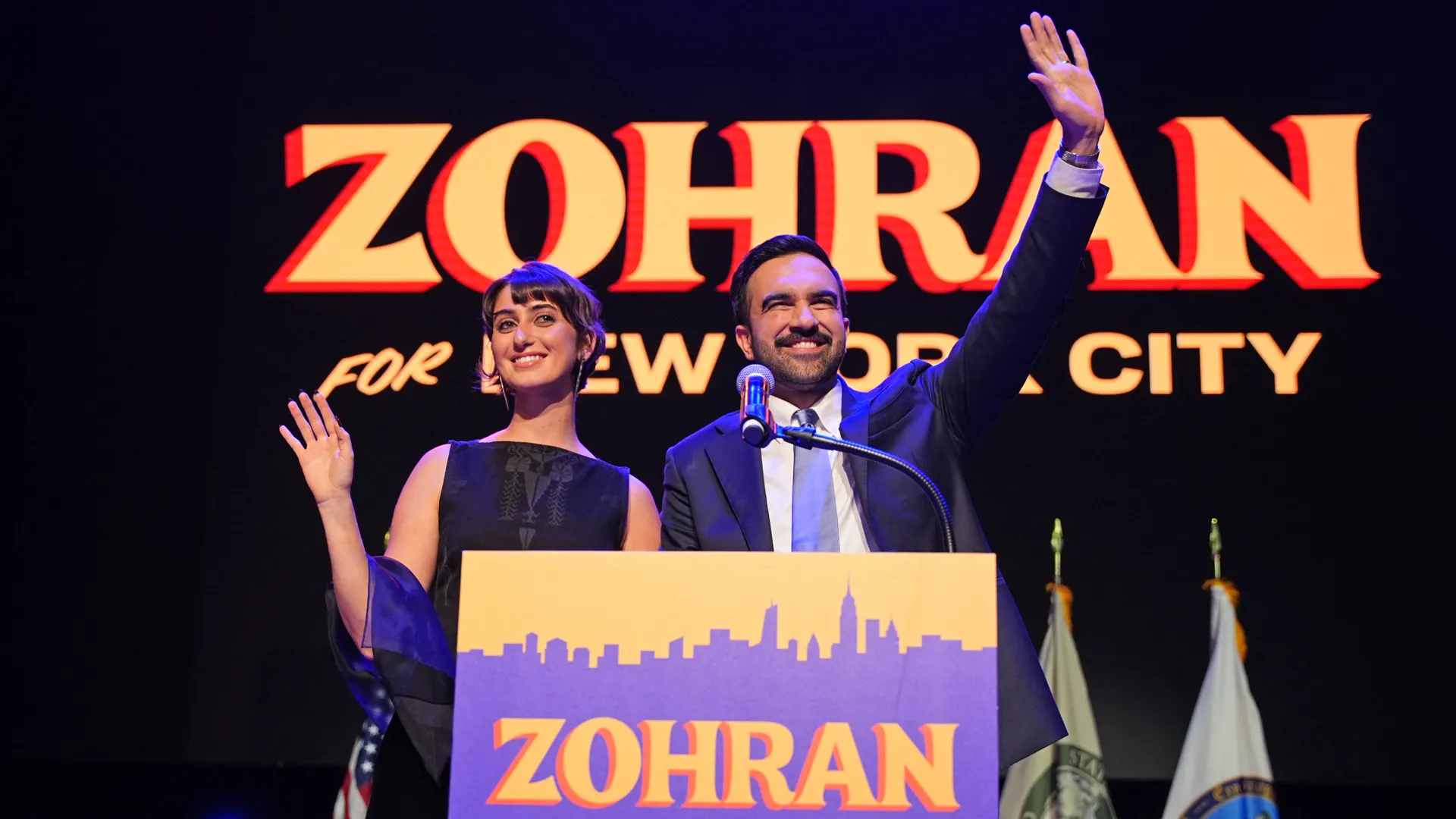

New York City elected Zohran Mamdani as its 111th mayor on Tuesday, in a landmark win that reshapes the city’s political landscape.
Here are the key take-aways from his historic win:
Victory and significance
-
Mamdani captured about 50.4 % of the vote, defeating Andrew Cuomo, who ran as an independent and garnered ~41.6 %.
-
He becomes New York’s first Muslim mayor, its first South Asian mayor, and one of the youngest in city history.
-
The election drew more than 2 million voters, the highest for a mayoral contest in decades, driven by strong early-voting turnout.
The win and the message
Mamdani’s campaign was built on affordability, housing and transit reform: rent freezes on stabilized units, fare-free buses, increasing the minimum wage, building more affordable housing.
In his victory speech he claimed a “mandate for a city that we can afford” and alluded to challenging entrenched powers, signalling bold change ahead
Broader implications
-
His triumph is viewed as a milestone for the progressive wing of the Democratic Party, and could signal a shift in how urban governance is done.
-
Business interests and centrist Democrats are watching closely — some raised caution about the feasibility of his agenda and how it will be funded.
-
The fact that a candidate with a “socialist” label can win NYC paves new terrain for left-wing politics in major cities.
What’s next
Mamdani will be sworn in on January 1, 2026 and must now convert campaign promises into policy. The focus will be on:
-
Delivering on cost-of-living relief and housing policy
-
Managing city budgets and navigating relations with state government and business sectors
-
Governing a diverse, large metropolis with high expectations