
by Aspen Ford, Washington State Standard
March 2, 2026
Big technology companies scored a win in Olympia on Monday, as a sweeping bill to regulate data centers lapsed in the Washington state Legislature.
House Bill 2515 would have required data centers to pay additional utility charges, comply with clean energy requirements, and shut off power at times of peak demand on the grid.
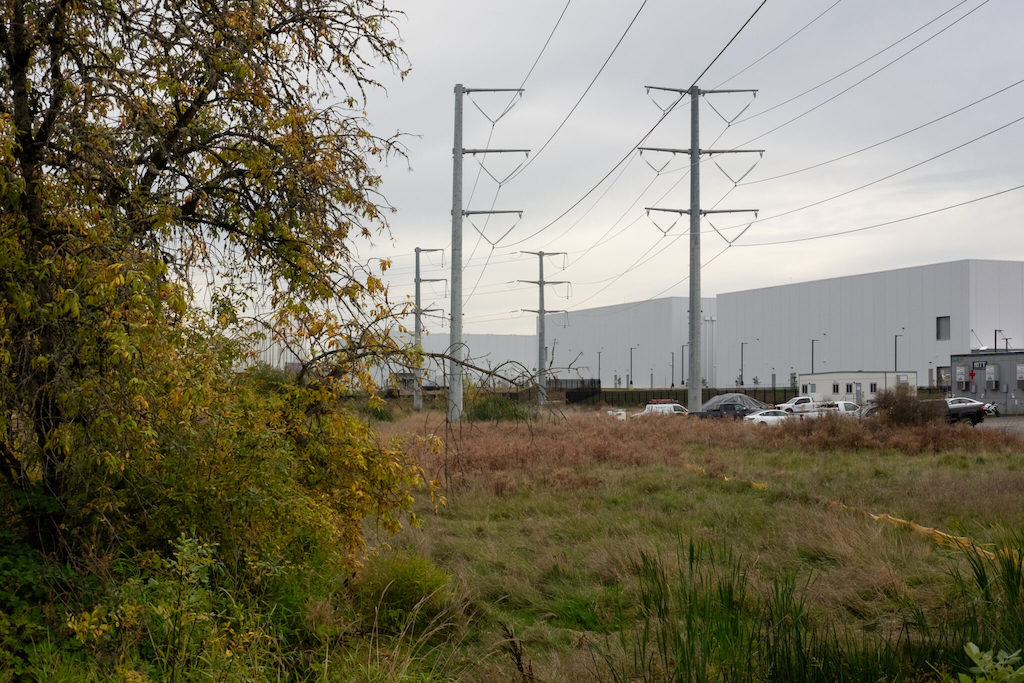
Data centers are the computing backbone for much of the internet-connected technology people rely on. But they are on track to be the largest electricity users in the Pacific Northwest. The idea with the bill was to get protections in place for other utility customers, the power grid and the environment as the facilities rapidly expand.
Tech giants like Microsoft and Amazon were at the center of the battle over the bill.
Industry fought against the legislation, arguing it would add unwieldy costs and regulations, and that transparency requirements could reveal trade secrets. All of this at a time when companies are racing to build data centers to support artificial intelligence.
The bill was on the Senate Ways and Means agenda ahead of a key procedural deadline on Monday, but lawmakers declined to give it a vote.
Responding to the legislation’s collapse, its lead sponsor, Rep. Beth Doglio, D-Olympia, called out the companies that lobbied against the policy.
“It’s easy for big tech to make big promises in a press release,” she said. “But when states ask for accountability to those promises, their commitment evaporates.”
“As data center growth accelerates across Washington, we have a responsibility to ensure the costs of expanding the digital economy aren’t shifted onto working families and small businesses,” she added.
Dan Diorio, vice president of state policy for the Data Center Coalition, in a statement late Monday, stressed the importance of data centers for parts of the economy ranging from medical care to air travel. He said that they’ve created thousands of jobs and generated billions of dollars of investment and tax revenue.
“At a time when the average American household has 21 connected devices, data centers make possible the essential services and cutting-edge technologies that support our economy and enhance our quality of life,” he said.
“The data center industry will continue to partner with utilities, grid operators, and policymakers to advance the infrastructure needed for a reliable, affordable grid that supports economic growth for all customers,” Diorio added.
Supporters of the bill praised it for its promise to prevent electricity rate hikes for other ratepayers and to force greater transparency on the facilities’ energy and water usage.
Lawmakers also touted the proposal as a way to help vulnerable people during heat waves when the grid is at risk of blackouts.
As the session went on, parts of the original bill eroded.
Doglio said she was disappointed by an earlier amendment that slashed a state fee for data centers that would’ve been linked to their energy consumption. Projected to bring in over $30 million a year, the fee would have helped low-income families weatherize their homes and fund AI education programs.
Before it died, the proposal was on track to be narrowed even more.
Sen. Manka Dhingra, D-Redmond, sponsored a rewrite of the bill that would have removed a requirement for data centers to build out and rely on their own renewable energy resources, aligning with the state’s Clean Energy Transformation Act.
If the bill had received a committee vote in Senate Ways and Means, it was Dhingra’s amended version that was expected to pass.
In recent days, another contentious argument dealt with requirements for data centers to reduce their energy use during times of high demand on the grid.
The proposal would have limited data centers to use only backup power — namely, diesel-powered generators — during these times. Industry lobbyists contended that data centers can’t just be turned off because they provide services to critical users like hospitals and 911 call centers.
Doglio indicated that she is committed to continuing work on the legislation in next year’s session.
Washington State Standard is part of States Newsroom, a nonprofit news network supported by grants and a coalition of donors as a 501c(3) public charity. Washington State Standard maintains editorial independence. Contact Editor Bill Lucia for questions: info@washingtonstatestandard.com.