
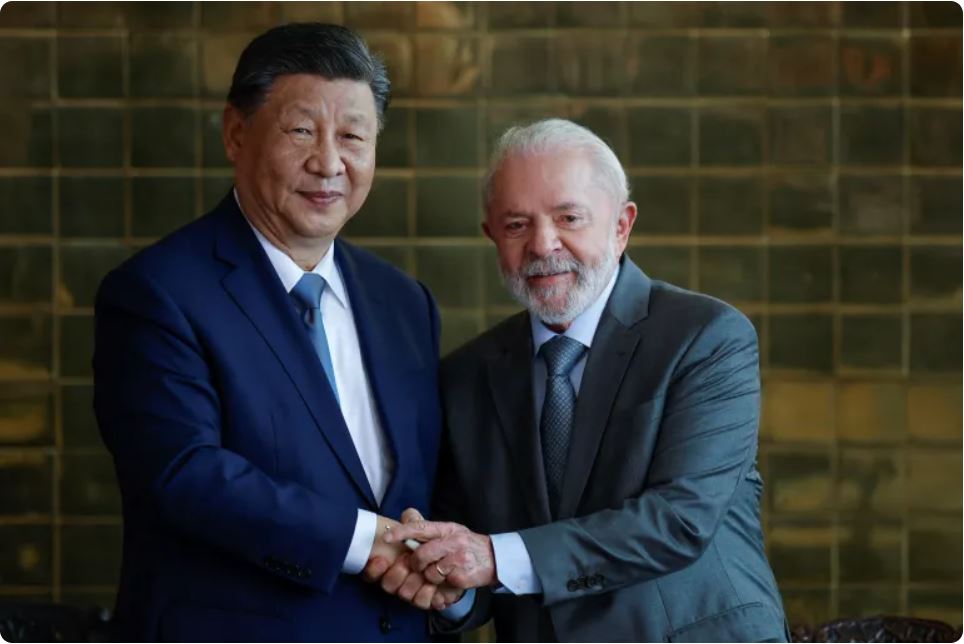

When Brazilian President Luiz Inacio Lula da Silva was in China earlier this year for his third meeting with Xi Jinping since returning to office in 2023, he hailed the relationship between the two countries as “indestructible”.That proximity will likely increase even more following United States President Donald Trump’s announcement of a 50 percent tariff on Brazilian imported goods for overtly political reasons, experts say.
“The reality is that, today, the relation between Brazil and China is much more positive and promising than the one with the United States,” said Tulio Cariello, director of content and research at the Brazil-China Business Council (CEBC). Trump’s pledge to inflict a 50-percent tariff on Brazil, due to come into effect on August 1, sent shockwaves throughout Brazil, especially since under the so-called “Liberation Day” tariffs that Trump had announced on April 2, Brazilian imports would be taxed at 10 percent.
That was also significantly less than percentages inflicted on other Brazilian competitors in the American market, prompting a sense of opportunity among businesses in South America’s most populous country.
Hence, the sudden decision of a 50-percent tariff was a rude shock, particularly for sectors that are big exporters to the US, such as aircraft, car parts, coffee and orange juice.The 50-percent tariff came on the heels of the BRICS summit in Rio de Janeiro, where leaders of developing nations raised “serious concerns” about the increase of tariffs which it said were “inconsistent with WTO [World Trade Organization] rules.”
In a letter justifying the tariff, Trump directly tied the measure to former Brazilian President Jair Bolsonaro’s current predicament, which he called a “witch hunt”. Bolsonaro, often dubbed the “Trump of the tropics”, is facing trial for allegedly attempting to orchestrate a coup to remain in power despite his 2022 election loss to Lula. Trump also erroneously claimed a trade deficit with Brazil. Brazil has a deficit of about $7.4bn with the US, and a surplus of about $31bn with China. The political nature of the tariffs marked a sharp departure from Trump’s usual rationale, drawing widespread condemnation across Brazil’s political spectrum, and from China.