

by Jake Goldstein-Street, Washington State Standard
November 20, 2026
The company that runs a Longview paper mill must pay the state of Washington $10 million after failing to repair a tank before it imploded this spring and killed 11 people, state officials announced Friday.
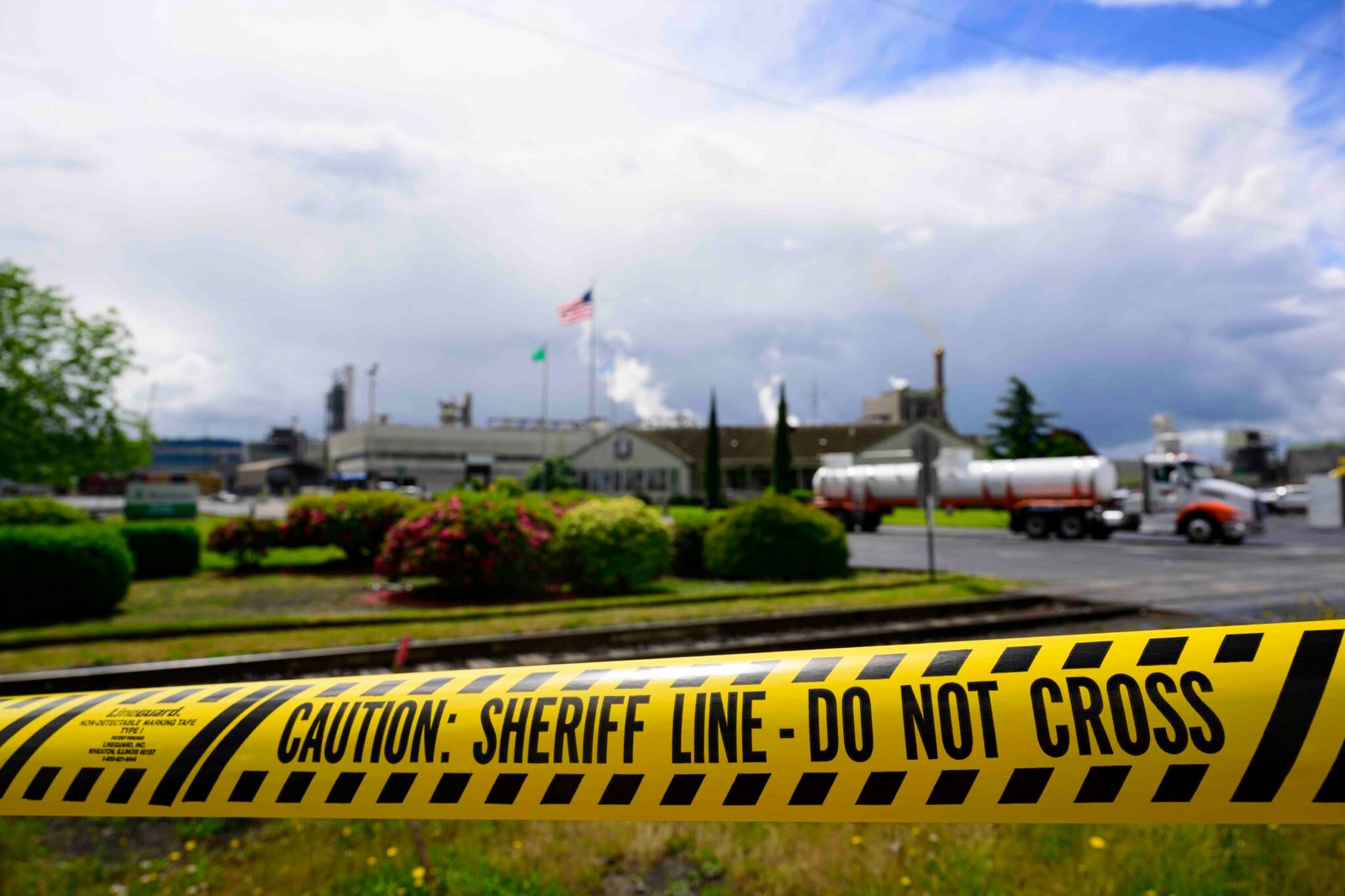
Nippon Dynawave Packaging’s G-tank, with about 900,000 gallons of caustic white liquor, ruptured the morning of May 26, killing eight people in the mill’s electrical maintenance shop, two in the mechanical maintenance shop and one in the courtyard. Five maintenance workers and the foreman were able to escape, though two suffered serious chemical burns.
Some of the liquid, which is used in paper manufacturing and can cause severe burns, flowed into the nearby Columbia River and a local diking system.
The $10.1 million fine is for violations of both health and safety as well as environmental regulations. The state Department of Labor and Industries is citing Nippon for 75 violations, with fines totaling $9 million, after reviewing more than 40,000 documents and interviewing over 70 witnesses, said Joel Sacks, the agency director.
Labor and Industries is referring the Longview case to prosecutors to consider criminal charges.
“Our citations include egregious, willful, serious violations for keeping G-tank in operation despite repeated notice that it was not fit for service, not conducting sufficient inspections or addressing the problems their inspectors found at 13 other tanks, and exposing workers and first responders to more unnecessary dangers with their emergency response,” Sacks said in a press conference in Longview on Friday.
In a statement, Nippon said the characterization of its actions as egregious and willful “failed to include important facts and context regarding actions taken by NDP and the timeline of events leading up to and on the day of the May 26th incident.”
“We will address that issue through the appropriate appeals process,” the company said.
Nippon has 15 days to appeal the citation.
The $9 million fine is three times higher than the previous Labor and Industries record. The earlier record was for the 2010 Tesoro refinery disaster in Anacortes, which killed seven people.
“Our findings are both shocking and heartbreaking, and the resulting penalties should send a strong message to employers across the state of Washington,” Sacks said.
The state Department of Ecology found 34 violations of air, water and dangerous waste regulations. This led to a $296,500 penalty. Ecology is also requiring the company to pay $665,000 to the agency and the state Military Department for emergency response costs. The company could still face a damage assessment for the harm of the white liquor spill on natural resources.
Nippon said it was reviewing the Ecology penalty before determining next steps.
Labor and Industries also found Nippon’s emergency planning and response fell short of state requirements, putting workers and first responders in danger.
In August, a preliminary federal investigation found Nippon knew the white liquor tank wasn’t fit for service and could fail nearly a year before it collapsed. The probe remains ongoing. Labor and Industries concluded three reports between August 2025 and February 2026 indicated the tank walls were significantly corroded, which the company knew but took no action to address.
The result: 43 serious violations from Labor and Industries, one for each week Nippon kept the tank operating after the initial report of a problem.
“Nippon Dynawave had all of the information they needed to act, but they did not listen to the alarms of their consultants and their staff,” Sacks said.
Josh Estes, a spokesperson for the mill workers’ union, said “we’re deeply troubled and angry that a warning this serious went unaddressed.” He said workers should be included in workplace safety decisions and in verifying that corrective actions to the state’s findings are effective.
“Workers should never have to wonder whether a serious safety warning was acted on,” Estes said in a statement. “The people whose lives depend on these safeguards need to help shape them. We’re committed to closing the gaps that leave workers at risk and preventing another tragedy like Longview.”
The Labor and Industries fine will go into a workers’ compensation pension fund.
“We are committed to establishing a complete and accurate account of the May 26 incident to help prevent future tragedies,” the company said. “It is important to distinguish between the workplace safety findings in L&I’s report and a determination of what caused the May 26 incident. The report does not establish root cause, which remains under investigation.”
In the months and years before the implosion, a number of near misses at the Nippon mill piled up, according to Seattle Times reporting. The company put off other necessary repairs and appeared to put keeping the business running ahead of safety, while workers anonymously reported concerns to state investigators, according to the Times.
Since May, Labor and Industries has fined Nippon, which bought the mill in 2016, in multiple cases of workplace safety violations separate from the fatal tank collapse. In one case, the state agency fined the company more than $77,000 for a case where an employee fell into a sinkhole at the plant, was nearly covered in 145-degree pulp, and came close to being engulfed. Nippon appealed the fine.
In an earlier case, Nippon was cited for not documenting safety plans or keeping required records on an ammonia tank used to treat wastewater at the mill, leading to a small fine.
The company also faces multiple lawsuits from families of the victims, alleging Nippon violated state safety regulations.
Pulp production at the mill remains shuttered. The company said this month it’s aiming to restart work next month. Other operations at the mill have reopened, with workers returning to the facility.
After the fatal rupture, Labor and Industries opened investigations into the state’s two other kraft pulp and paper mills, in Longview and Port Townsend.
This story has been updated with comment from Nippon Dynawave Packaging and the Association of Western Pulp and Paper Workers.
Washington State Standard is part of States Newsroom, a nonprofit news network supported by grants and a coalition of donors as a 501c(3) public charity. Washington State Standard maintains editorial independence. Contact Editor Sean Robinson for questions: info@washingtonstatestandard.com.