
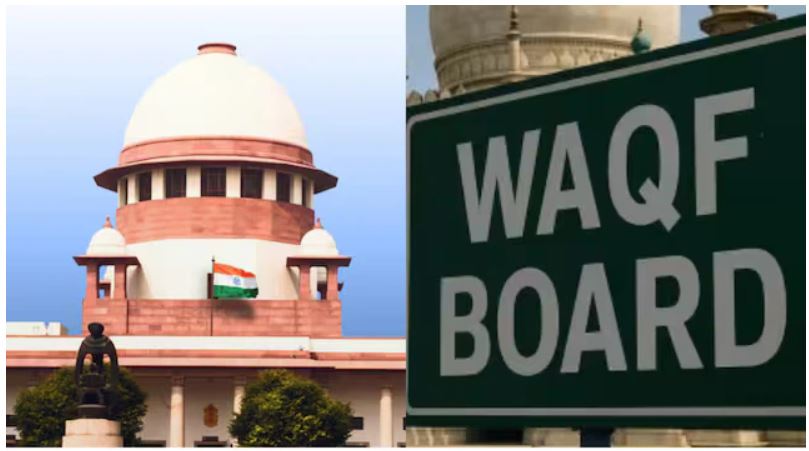

In India After getting the President’s approval, the Wakf Amendment Bill has become a law. However, as soon as it was passed by both the houses of the Parliament, it was challenged in the Supreme Court. So far, many petitions have been filed in which it has been challenged as against the Constitution and a violation of the fundamental right of religious freedom.
But if we look at the scope of the court to examine a law, it is a bit limited. The court examines any law on three grounds, legislative competence, violation of the Constitution and being arbitrary. If we look at all three grounds, it does not seem very easy to get it rejected by the Supreme Court.
What is the legal principle?
- But it is certain that if a detailed decision comes from the Supreme Court after hearing the case, then a clear system can be put in place for the management of religious charity properties in the country.
- When the Waqf Amendment Act 2025 reaches the court, it becomes necessary to look at the established legal principles while considering any law.
- Retired judge of Allahabad High Court SR Singh says that the Supreme Court considers the legality of any law mainly on three bases.