

by Jerry Cornfield, Washington State Standard
March 17, 2026
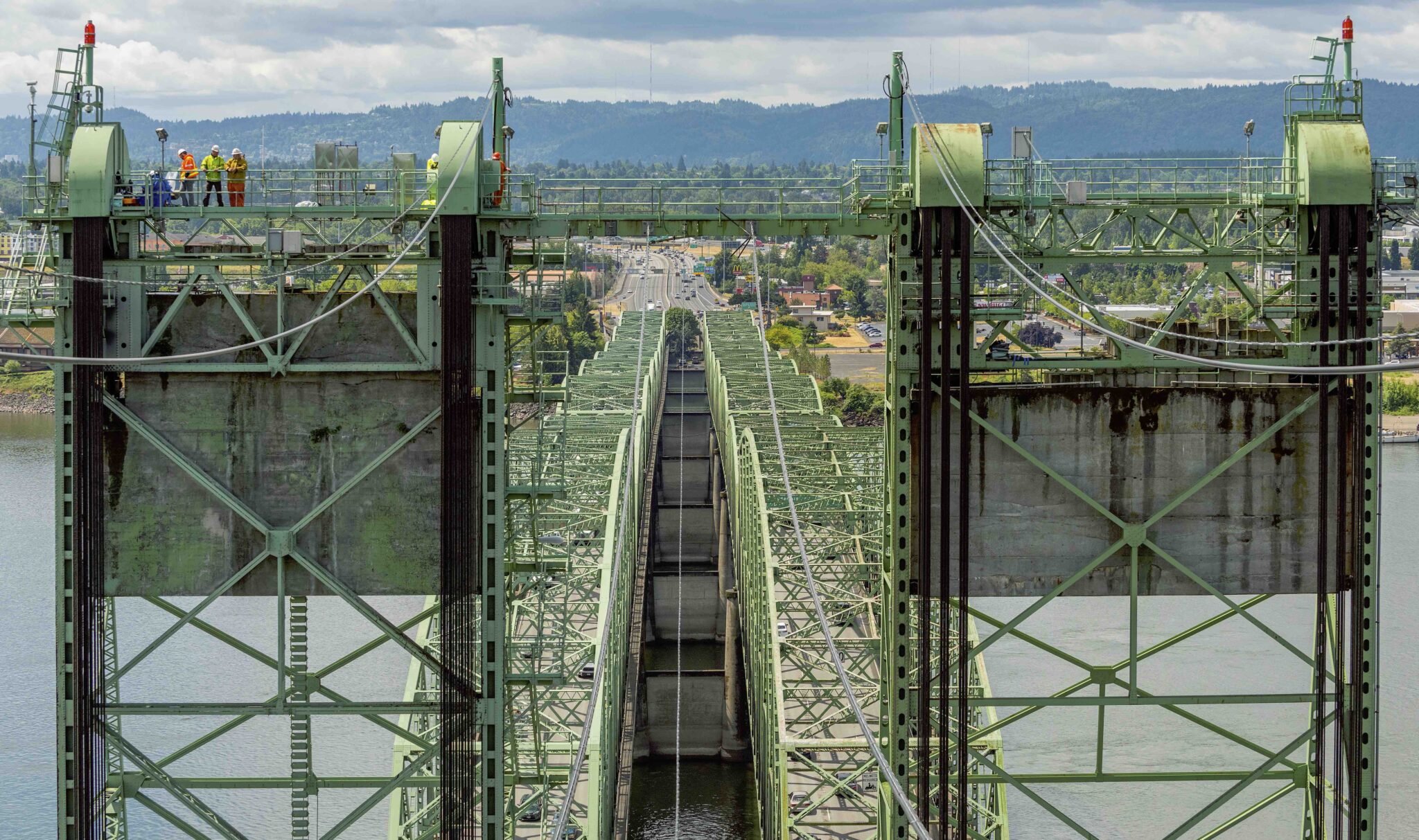
The price tag to construct a new interstate bridge linking Washington and Oregon has doubled to $14.4 billion, officials from the two states said Tuesday.
That means elements of the massive undertaking will be delayed as all the focus will be on building the new span on Interstate 5 across the Columbia River.
“The bridge must, and will be replaced,” Washington Gov. Bob Ferguson said in a statement. “Delaying a major project has never made costs go down.”
Oregon Gov. Tina Kotek said in a statement that by focusing available funding on a core set of projects, “we can deliver what Oregonians have been waiting on for decades. We need a new bridge and it’s time to start building it.”
The total cost estimate for both the bridge and full five-mile corridor is $13.5 billion to $15.2 billion, with a most likely cost of $14.4 billion, according to a press release issued by the Interstate Bridge Replacement Program.
Project planners estimate the tab for replacing the northbound and southbound spans of the bridge, connecting the new bridges to the highway, and extending light rail service to Vancouver will cost $7.65 billion.
“While this new estimate is a heavy lift, it doesn’t change our mission,” said Washington state Sen. Marko Liias, D-Edmonds, chair of the Senate Transportation Committee. “We’re going to prioritize every dollar and make the hard choices necessary to keep this bridge replacement moving forward. It’s about being smart with what we have so we can deliver what the public needs.”
Ferguson said inclusion of light rail transit between Portland and downtown Vancouver must remain part of the project. There are nearly 30 separate items — from bus shelters to off-ramp improvements — that are part of the overall endeavor.
The doubling of the cost estimate is not surprising.
For several years, project planners have estimated the price tag for replacing the bridge ranged from $5 billion to $7.5 billion, with the likely figure of around $6 billion. In September, legislators said they anticipate the total could reach $10 billion based on rising costs with other projects.
Staff have been recalculating the estimate for months, examining more than 100 risk factors, including inflation and tariffs.
Joe Cortright, a Portland economist and project critic, warned in January that the revised expense could range between $12.2 billion and $17.7 billion based on public records he obtained and shared with reporters.
Funding to pay for the project is coming from several sources.
Federal grants totaling $2.1 billion were awarded under the Biden administration.
Planners are pursuing $1 billion from the Federal Transit Administration’s Capital Investment Program for the light rail portion of the project. It would involve a 1.9-mile extension of light-rail from North Portland to a future station near Evergreen Boulevard in Vancouver, Washington. A decision on that funding isn’t expected until the project is further along.
Each state has committed about $1 billion. Tolls — which will be imposed in both directions on the existing bridge starting in 2027 and managed by Washington — are relied on for a minimum of $1.2 billion. Oregon has a moratorium on any tolls other than the bridge.
With a new cost estimate, program administrators must now draw up a plan showing how the multi-year undertaking will be financed. That is due to the federal government by the end of September and is needed to unlock a $1.5 billion capital investment grant secured in 2024.
Tuesday’s news will force each state to consider a larger contribution. Tolls, which are envisioned to range from $1.55 to $4.70 per trip based on time of day, could start out higher.
In addition, the Federal Highway Administration and Federal Transit Administration are expected to publish the final supplemental environmental impact statement for the project sometime this year.
If all the required boxes are checked and approvals obtained in 2026, planners anticipate cars could begin driving across a new bridge in 2032 or 2033.
Washington State Standard is part of States Newsroom, a nonprofit news network supported by grants and a coalition of donors as a 501c(3) public charity. Washington State Standard maintains editorial independence. Contact Editor Bill Lucia for questions: info@washingtonstatestandard.com.