
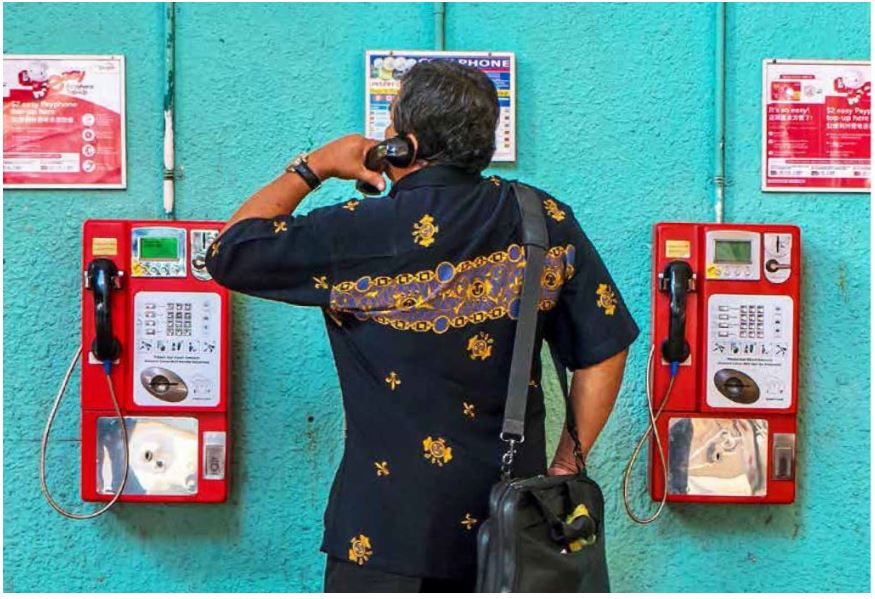

Today’s generation can hardly understand how special it was to talk on payphones. Whether to call a friend, ask about a distant relative or just say “hello” to someone, we had to go to that small booth on the street corner.
Often someone would already be standing there and we would have to wait for our turn. There was a different kind of excitement in that wait as to when we would get a chance to dial our number! The most important part of payphones were coins (Coin-Operated Telephones). 1 rupee, 2 rupee or 5 rupee coins were our conversation companions. As soon as you inserted the coin, a special tinkling sound was heard and the dial tone came.
If the call was going on for a long time, the machine would beep at intervals, as if saying, “Insert more coins, else the call will be disconnected!” At that time every word was important, because both time and money were limited. Yes, we did not want to waste even a single coin in useless talks.
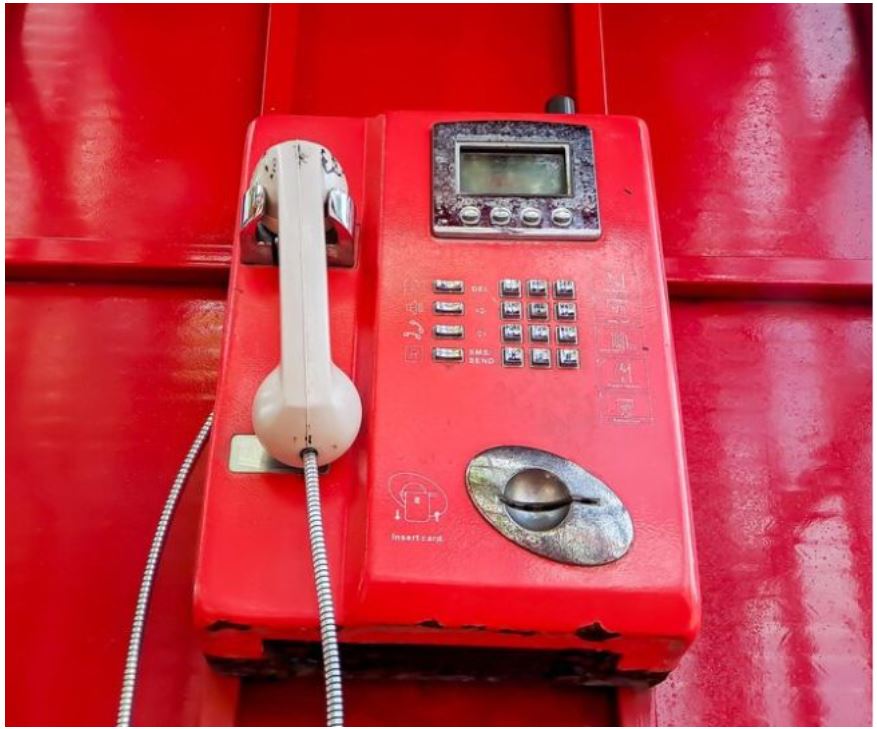
Payphones were not just a means of communication, they often became a meeting place. Friends met there, important messages were sent from there. In an emergency, these payphones were our biggest support. We could request anyone to move ahead in the line by saying, “I have to make an important call,” and most people would understand.
In the 1980s and 90s, there used to be a payphone in every street. The shopkeeper who operated it was often called ‘bhaiya’ and there used to be a queue outside his shop – if someone wanted to talk to the village Some wanted to know the answer to a job interview, while others were desperate to hear their mother’s voice. Many times the shopkeeper would listen to the conversation on the phone quietly and smile. Sometimes he would even give a little extra time for free, if he felt that the person on the other end was really talking under compulsion.
To make a call, one had to arrange for coins first. Sometimes a 1 rupee coin and sometimes a 25 paise coin. As soon as the sound of “tee tee” came while talking, it was time to insert the coin. Let us tell you, these phone booths are present outside railway stations, bus stands, schools, and even in small villages. It would not be wrong to say that once upon a time these were the lifeline of communication.