

by Jake Goldstein-Street, Washington State Standard
May 13, 2026
Last year, FIFA President Gianni Infantino likened this year’s World Cup to “104 Super Bowls.”
With the soccer tournament a month away, that’s feeling like a stretch.
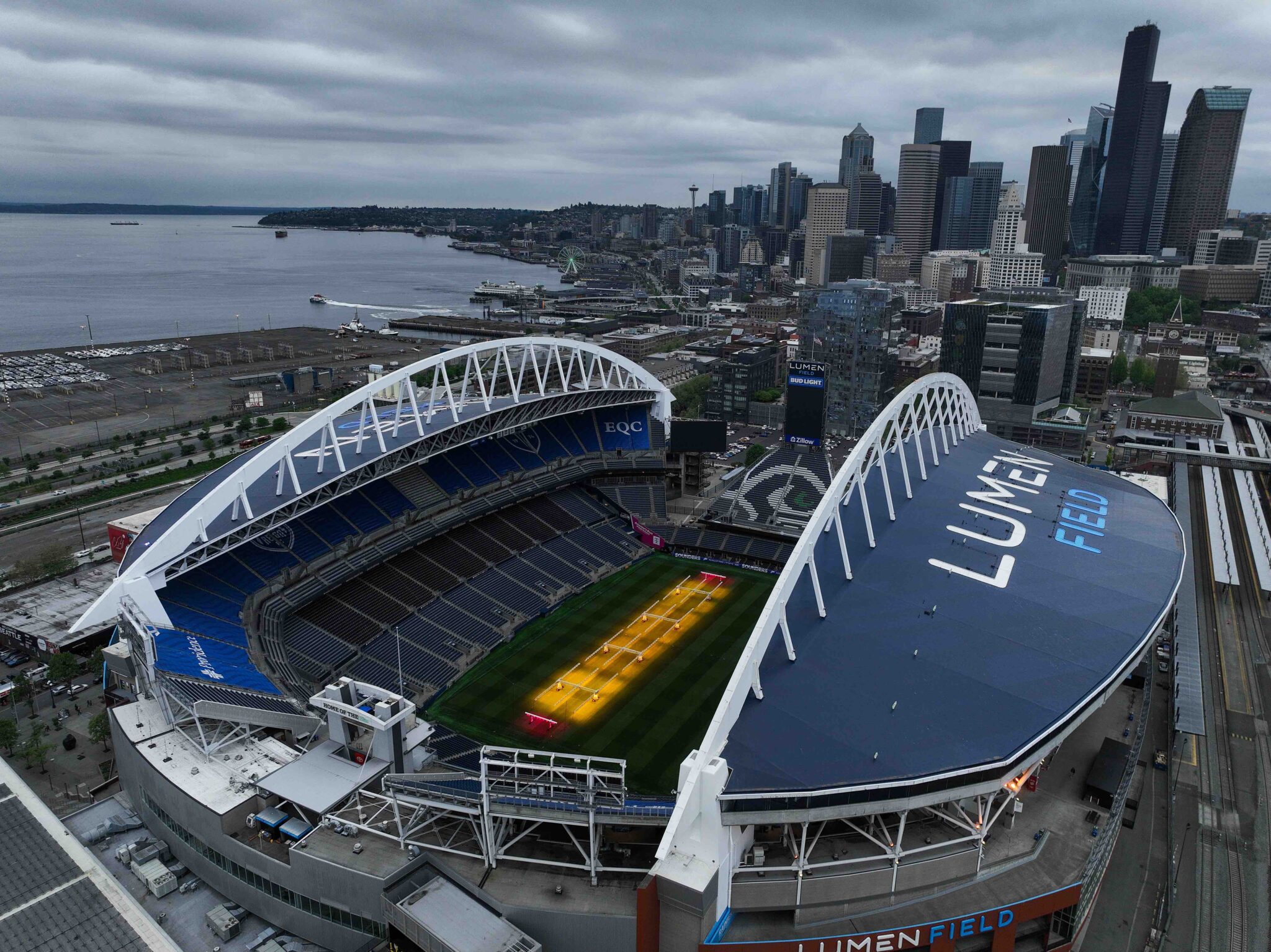
In Seattle, which will host six matches, bullish expectations for the local tourism economy have dampened. Many other cities are in the same boat.
The World Cup will take place between June and July, with 104 games scheduled in 16 cities across the U.S., Canada and Mexico.
Millions of tickets sold for the U.S. matches haven’t translated to hotel bookings, as domestic travelers outpace those from other countries, according to an analysis from the American Hotel and Lodging Association.
In Seattle, nearly 80% of respondents to the association’s survey reported bookings below expectations, and behind a typical summer. Many industry professionals across the country called the World Cup a “non-event” for their businesses.
There had been a hope that the tournament would push travelers out of Seattle’s booked-up urban core and into suburbs, spreading wealth from the world’s biggest sporting event. That hasn’t come to pass.
The head of Washington state’s hospitality association is trying to stay positive.
“The industry is hurting, it’s been hurting, and a good summer is welcome,” said Anthony Anton, president and CEO of the Washington Hospitality Association. “And anything that happens above a good summer will be a blessing.”
“There’s no reason to be down about that,” Anton added.
The local tourism bureau is forecasting over $845 million in total economic impact for Seattle and King County, with $96 million in state and local tax revenue and supporting 20,000 jobs. That’s 91% of what had been anticipated back in December 2024.
Seattle-area hotels are on track to see room revenue grow nearly 10% compared to June 2025, and 9% in July over last year, according to an analysis from early this year by CoStar Group. Cities hosting Super Bowls usually see at least 50% growth, said Michael Stathokostopoulos, senior director of hospitality analytics at CoStar.
“Obviously this is going to be a positive event for the U.S.,” Stathokostopoulos said. “I think it was a little bit overestimated in the beginning, potentially now it’s a little bit underestimated.”
Local tourism leaders note that World Cup fans often book accommodations at the last minute. Demand could also be shifting away from traditional hotels and toward short-term rentals through platforms like Airbnb.
“Our message to hoteliers is that there’s still a ton of opportunity to land these bookings, especially when you consider how strong our appeal is with our compact downtown and stadium,” Visit Seattle spokesperson Joey Thompson said in an email.
Meanwhile, Seattle is planning to spend $32 million in a combination of state, local and federal dollars on World Cup preparations. Most is for safety and security efforts.
‘Hard to forecast’
There are a few factors that could be behind the lagging bookings.
For one, Seattle didn’t draw matches with countries that have hordes of fans willing to travel. The teams include Qatar, Bosnia and Herzegovina, Egypt and Iran. Iran’s participation in the tournament had been in doubt given it is at war with the United States.
“Do you think a lot of Tehranian businessmen are going to come to Seattle?” asked Mark Everton, CEO of Explore Seattle Southside and chair of the state association of destination marketing organizations.
The war has also strained the oil market, driving up fuel prices and thus flight costs, which could deter travelers.
And Canadian tourism to the U.S. has dropped precipitously amid President Donald Trump’s rhetoric about our northern neighbor. Vehicle travel crossing the border into Washington state was down 45% in March compared to March 2024, before Trump took office. Canadian fans may not be eager to drive down to Seattle after catching a match in Vancouver, B.C.
Some fear that anxiety about the chaos of the World Cup spectacle could keep away potential visitors who would otherwise come to the region during its peak tourist season.
“It’s very hard to forecast this event, because this event has never happened before,” said Stathokostopoulos, because of having three countries host and a dramatically expanded field of teams competing.
On the upside for tourism, Seattle will play host to powerhouse Belgium and the U.S. team.
The hospitality industry is hopeful bookings will increase in the coming weeks as the World Cup approaches. This played out in the 2022 tournament in Qatar and other recent international soccer tournaments, said Visit Seattle Chief Business Officer Kelly Saling.
YOU MAKE OUR WORK POSSIBLE.
The tournament’s length may also help, as matches are spread over weeks, unlike, say, the MLB All-Star Weekend that Seattle hosted in 2023, which brought lots of tourists but not for long. The World Cup’s schedule could give visitors the opportunity to sightsee — and spend money — for days between matches, including outside of the urban core.
And, come July, the city will host two, higher-profile knockout round matches, which are more likely to feature teams with mobs of traveling fans, like France, England, Germany, Spain, Argentina, Brazil.
Anton, of the hospitality association, argued the World Cup will serve as “the best possible postcard we could have for the Northwest.” This could interest travelers from around the world to someday visit the Puget Sound region.
Local hotels have been struggling for years, with negative outside perceptions of public safety in Seattle that have made it a less attractive destination, high costs and then the pandemic, Anton said. He’s encouraging hoteliers to plan for a summer similar to those seen in the 2010s.
Capitalizing
The Downtown Seattle Association will be activating local parks during the tournament to give people reasons to come downtown. Drawing people there has been a yearslong pursuit for city leaders after the pandemic.
There’ll be watch parties at Westlake Park, music and more at Occidental Square, soccer-themed selfie stations at Pioneer Park.
“We’re going to have so many people who are coming just for the game,” said Jennifer Casillas, a vice president at the association. “We want to show them all the other reasons to be here and to come back after the World Cup.”
A new law will ensure some of the revenue from the matches at Lumen Field stays in the community. It requires 30% of the state’s portion of sales tax revenue from the downtown stadiums to be distributed to neighborhood preservation and development groups in Pioneer Square, Chinatown-International District and Central District.
The law’s sponsor, Rep. Sharon Tomiko Santos, D-Seattle, said the negative spillover from the stadiums, like increasing traffic and limiting parking, have been felt in those neighborhoods with little benefit.
She said that the expectation during the MLB All-Star Weekend in 2023 was that restaurants and businesses in the Chinatown-International District would get residual revenue from the increased foot traffic. But the tourists didn’t come. Santos said she pushed the bill with the upcoming World Cup in mind.
“This is not a handout,” Santos said, “this is about protecting and saving a community.”
The local World Cup organizing committee is pushing a guide, called the “Unity Loop,” allowing visitors to choose their own adventure and explore more of Seattle.
“Hopefully we’re going to see more large events on the horizon,” said James Sido, media relations director at the downtown association, “like the 2031 Women’s World Cup, for example; the NFL draft is always bouncing around from market to market.”
Washington State Standard is part of States Newsroom, a nonprofit news network supported by grants and a coalition of donors as a 501c(3) public charity. Washington State Standard maintains editorial independence. Contact Editor Bill Lucia for questions: info@washingtonstatestandard.com.